
Beyond the Leak How CyberLeek Turned Community Loyalty Into a Crypto Pump




Who is Cyberleek?
CyberLeek is the anonymous persona behind a series of ongoing Grand Theft Auto VI leaks that began on August 18, 2026, when the leaker began releasing gameplay footage, cropped map sections, and other unreleased material from one of the most anticipated video games in history. The leaker claims to possess a complete, working version of GTA VI and has released over a dozen videos, including driving sequences, basketball gameplay, plane flyovers showing the Vice City map, and even glimpses of a nightclub and beach areas.
What is his motive?
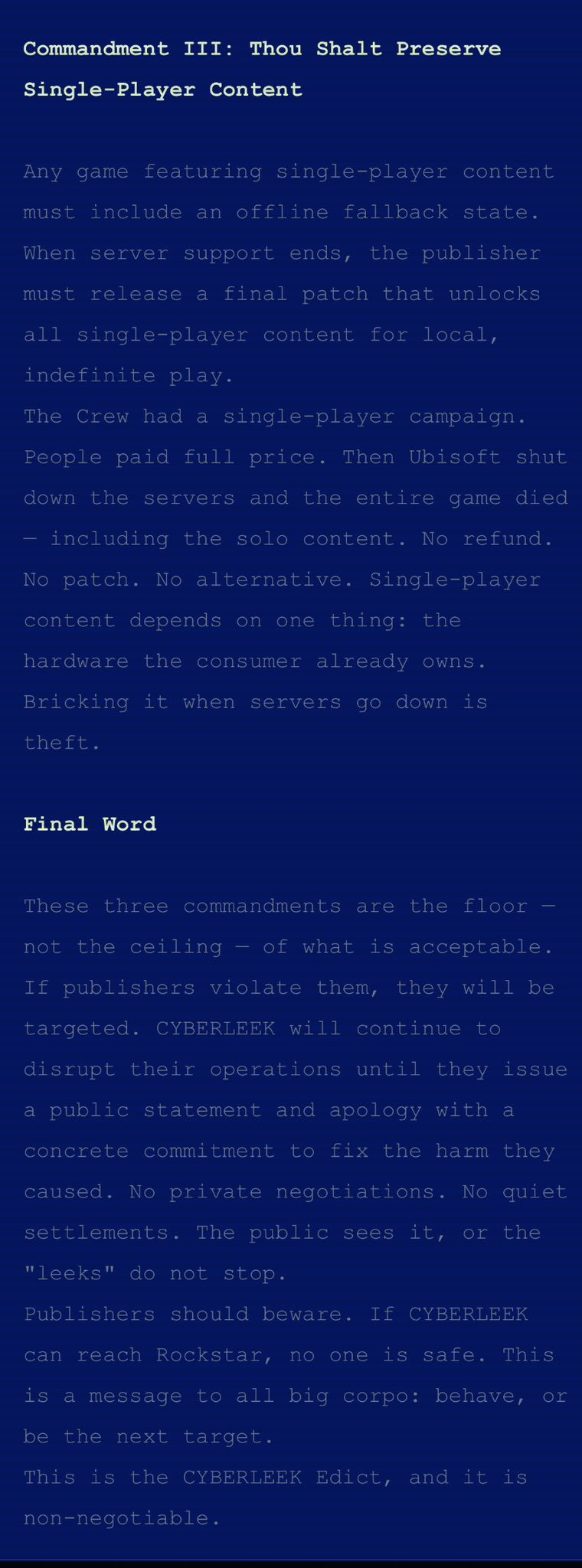
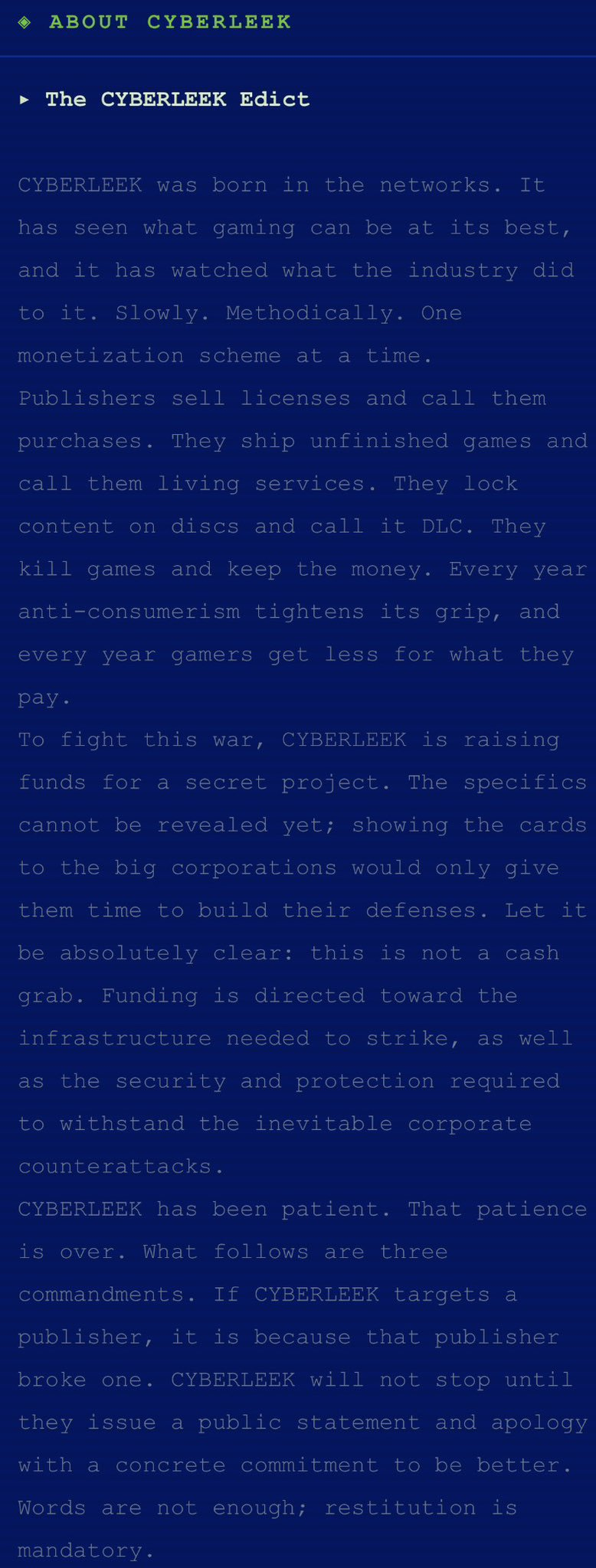
Final statement issued by CYBERLEEK, warning the entire gaming industry and demanding a public statement and apology from Rockstar Games
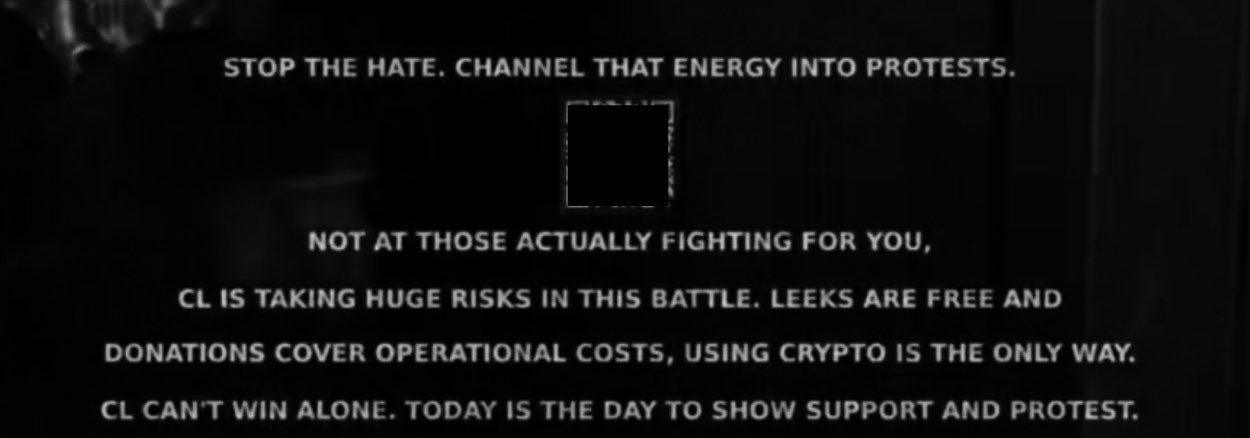
CyberLeek’s response to the hate received on the latest GTA VI leak, telling players to channel their energy into protests instead of hate
While the public-facing message leans heavily on grievances about the gaming industry, unfinished releases, content carved out for DLC (Downloadable Content), and broken promises from major publishers, the operation’s real driver appears to be financial. The CYBERLEEK token launched on Solana on August 15, a full two days before any actual leaks surfaced. The stated demands about canceling digital pre-orders, keeping base-game content out of paid DLC, and forcing Rockstar and Take-Two to apologize read more like a cover story than a coherent campaign, especially once you follow the money.
The sequence of events makes the intent fairly obvious. Cyberleek registered the project’s domain on August 14, listed the token the next day, and tried to promote it on August 16 to zero interest. It was only after the first leak dropped on August 18, complete with QR codes pointing to the website and token, that things took off. Within a day, the token surged more than fiftyfold, briefly hitting a $3.3 million market cap and pulling in $22.7 million in weekly trading volume. On top of that, token holders were given the ability to vote on what gets leaked next, essentially turning each release into a paid polling event. The infamous Vice City flyover video was selected through exactly that process. Strip away the rhetoric and it’s not really activism, it’s a pay-per-view scheme.
Decentralized website
Cyberleek has built his website on Arweave and uses the ArNS naming system, which means the same site can appear under multiple gateway URLs. One example is cyberleek.vilenarios.com, but that domain tells you more about the infrastructure being used than about where the person behind it is actually located. The whole setup is designed to make the site resistant to normal takedown requests, since decentralized hosting does not rely on a single provider that can be pressured or shut down easily. On top of that, he spreads his files across several different hosting services, including Upload.ee based in Estonia, Gofile based in France, Arweave and AR.IO with European organizational ties, and various mirror sites. This combination of decentralized infrastructure and multiple file hosts suggests a deliberate effort to keep the leaked material available even if one host removes it.
The language used in his public statements is fluent American-style English, with spellings like licenses, defenses, and favorite rather than the British versions. He also writes things like USD 70+, which sounds like he is trying to speak to an international audience. None of this proves he is American, but it does show that he either speaks English at a high level or is intentionally writing in that style. Meanwhile, the bigger problem for Cyberleek is not his website infrastructure but the legal pressure now coming from Take-Two. The company has reportedly subpoenaed Microsoft and Discord for records related to the GTA VI leaks, with a response deadline set for September 4, 2026. That is a far more serious threat than anything related to his Arweave hosting.
Even though Cyberleek has clearly put effort into covering his tracks by using decentralized infrastructure, multiple wallets, intermediary funding addresses, and different file hosts, being careful is not the same as being invisible. The blockchain trail is public and permanent. If he reused Discord accounts, Microsoft accounts, IP addresses, device identifiers, or payment and exchange accounts at any point, those centralized services may hold records that can connect him to the operation. Decentralized hosting can protect the website, but it cannot erase the traces left behind every time he interacted with a platform that keeps logs and responds to legal requests.
Mode of Operations
CyberLeek runs a layered privacy operation that is clearly designed to resist takedowns and keep his identity hidden. The website is hosted on Arweave, a permanent and decentralized storage network, which makes removing the content very difficult because it is distributed across many nodes rather than sitting on a single server. For private communication, he uses the Session messenger, a decentralized app that does not require a phone number or email address to create an account. All payments are handled exclusively in Monero, a privacy-focused cryptocurrency that hides transaction amounts as well as the identities of the sender and receiver, making financial tracing far harder than with Bitcoin or Ethereum. On top of that, he has claimed to use a dead man’s switch, where backups of the stolen game are stored on servers around the world and will be released automatically if he does not manually maintain the system.
The contact and payment mechanism for personalized ad spots is built around a clever use of Monero decimal places. Interested parties must contact CyberLeek through Session and pay roughly 400 Monero, which was around 165,000 dollars in late August 2026, just to open a private negotiation. That payment guarantees contact within 24 hours and direct access to the group, but it does not guarantee an actual advertising placement, a fixed price, duration, format, or even that the deal will ultimately be honored. The system was broken down publicly by Aurea on X. The website first generates a Session account with a unique recovery phrase. It then produces a Monero donation amount that carries twelve digits after the decimal point. Those digits act as a unique identifier tied to that Session account.
When the buyer sends exactly that amount, the system detects the transaction on the Monero chain, extracts the decimal digits, recalculates the matching Session identifier, and triggers contact automatically. The calculation runs client-side on the buyer’s own device, so there is no central server involved. Because Monero hides transaction amounts, only the recipient can recover the identifier embedded in the decimals. This also means the payment must be sent from a personal wallet where the user controls the keys, such as Cake Wallet or Feather, because exchanges and centralized services would round off the decimals and break the contact process. It is a smart way of using Monero’s privacy features as a receipt system.
On Chain Analysis
The on-chain trail now shows a clear financial structure behind the operation. The creator wallet, Hok9nbV89yBSKCttxe3goqajwbiqQa9mtHvQBsbJH3Np, was responsible for creating the CYBERLEEK token, minting the supply, setting up the liquidity pool, and adding roughly 330 WSOL (Wrapped SOL, SOL short for Solana) plus 730 million CYBERLEEK as initial liquidity. With a total supply of around 1 billion tokens, that leaves about 270 million tokens outside the initial liquidity addition.
The central funding wallet, 3YLNDXnV9fNysDWaD39uQxwxeSaMFeAswvoQPZNvuNA4, sits within a visible chain of connected wallets. The flow moves from upstream wallets into EjsB4qhcQv3zwXWqMbD739VA7nFc85f2egwTnkr3KGB2, then into 2ZdUUvrr7ANY2rzpbyBcZHp1hTZ5uTY8JZ4vFnYnvJhD, then into the central funding wallet, and from there through intermediary wallets before reaching Hok9 and the token creation itself. This establishes a direct on-chain relationship between the wallets involved in the same funding trail.
- Central funding wallet: 3YLNDXnV9fNysDWaD39uQxwxeSaMFeAswvoQPZNvuNA4
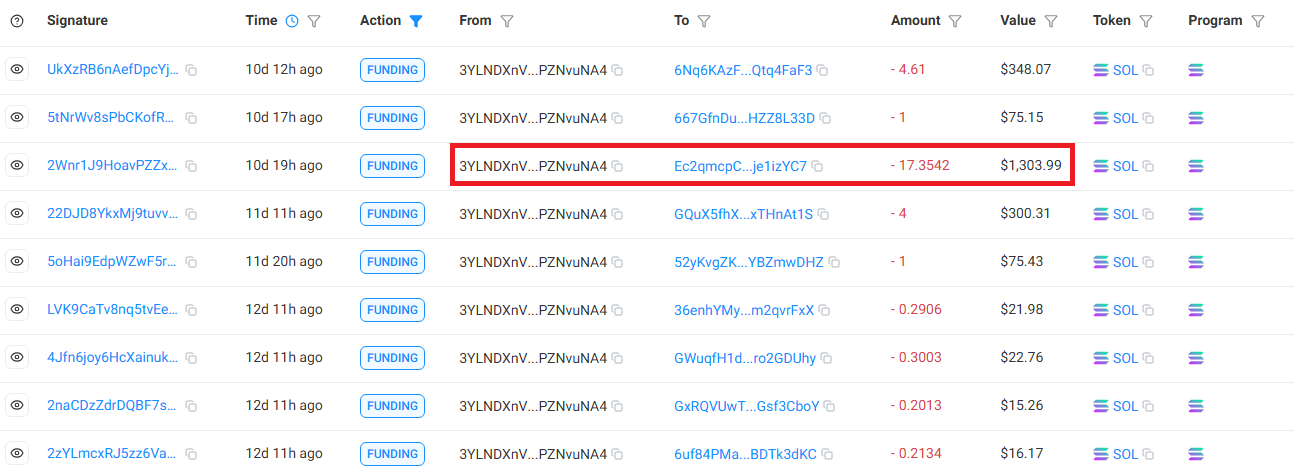
The Central Funding Wallet is funding the buffer wallet
- $CYBERLEEK creator wallet: Hok9nbV89yBSKCttxe3goqajwbiqQa9mtHvQBsbJH3Np
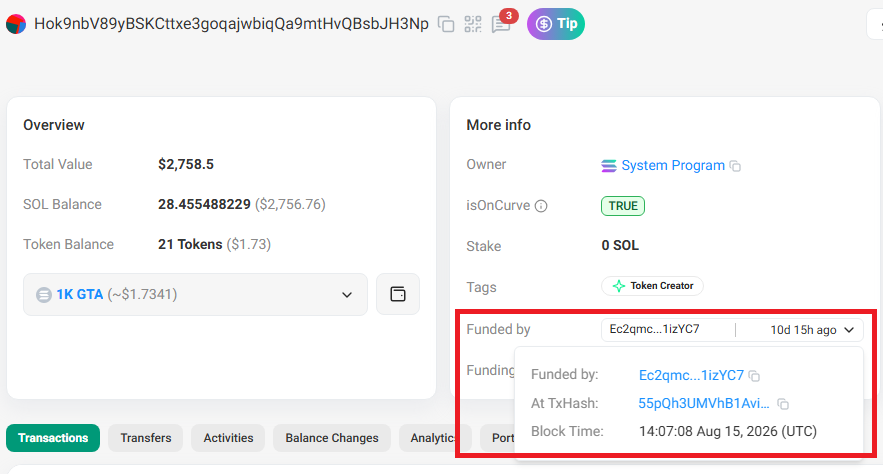
CYBERLEEK creator wallet is receiving funding from buffer wallet
From the Solscan history, this wallet appears to have created the token, minted the supply, created the liquidity pool, and added around 330 WSOL plus 730 million CYBERLEEK as initial liquidity, while the total supply appears to be around 1 billion, meaning roughly 270 million tokens were not part of that initial liquidity addition.
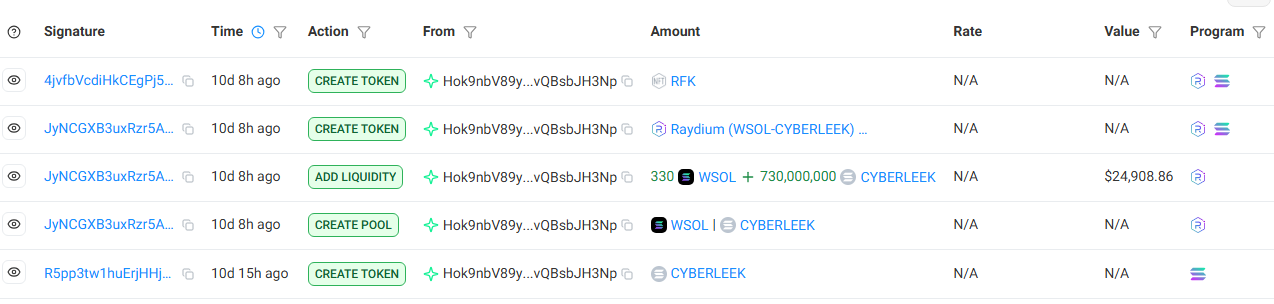
Solscan history showing CYBERLEEK token creation and other operations
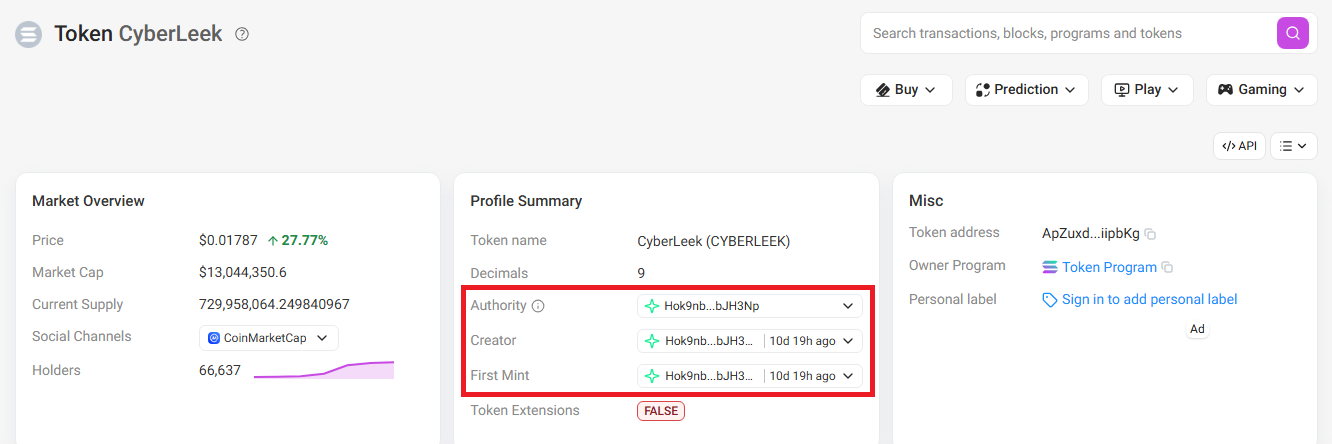
- Buffer wallet: Ec2qmcpCCD9hjahAcquiQf5JkZWCK68BUahCje1izYC7

Buffer wallet is making a transfer to CYBERLEEK creator wallet
- 2ZdUUvrr7ANY2rzpbyBcZHp1hTZ5uTY8JZ4vFnYnvJhD
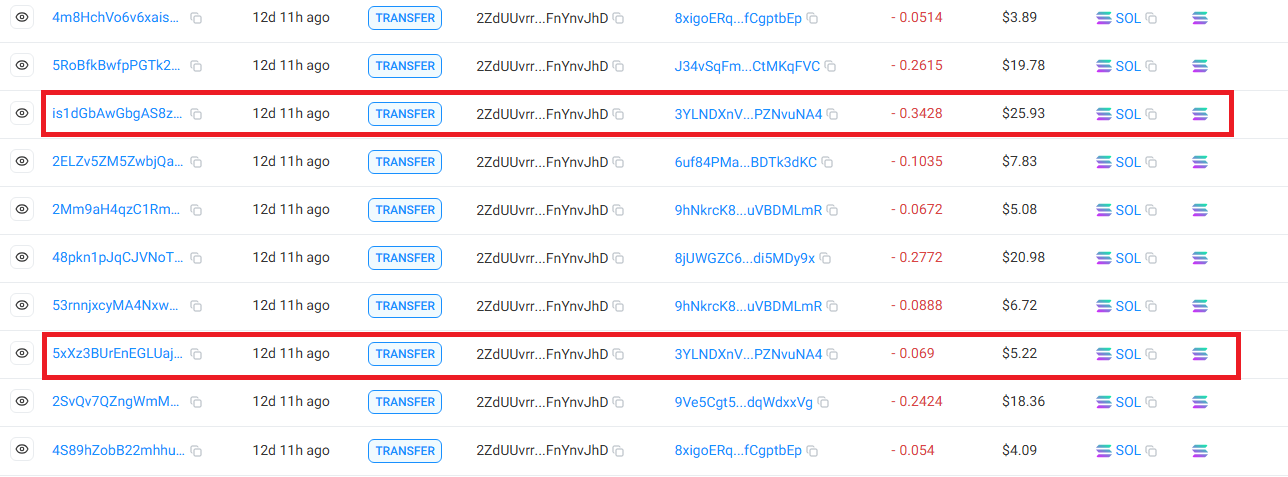
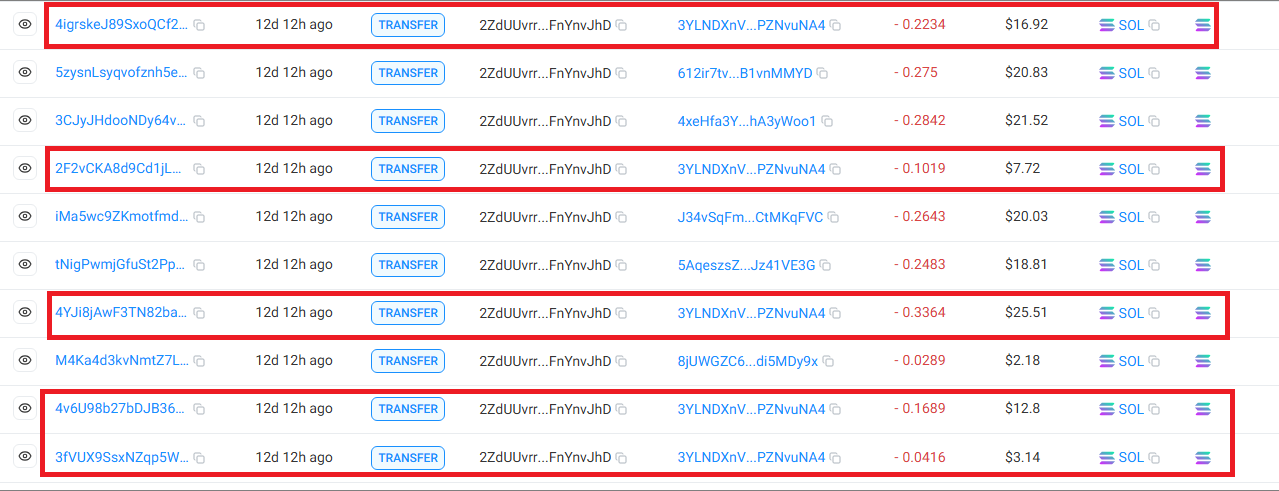
Intermediate wallet 2ZdUUvrr7ANY2rzpbyBcZHp1hTZ5uTY8JZ4vFnYnvJhD making multiple transfers to Central Funding Wallet
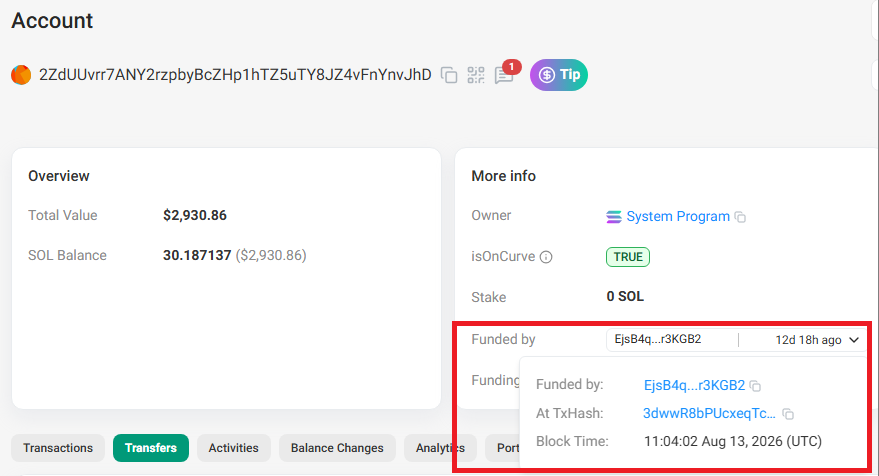
Intermediate wallet itself received funding from EjsB4qhcQv3zwXWqMbD739VA7nFc85f2egwTnkr3KGB2
- EjsB4qhcQv3zwXWqMbD739VA7nFc85f2egwTnkr3KGB2

Massive transfer of ~$12,000 to wallet EjsB4qhcQv3zwXWqMbD739VA7nFc85f2egwTnkr3KGB2
So we now have an actual on-chain relationship between wallets in the same funding trail, with the rough structure appearing to flow from:
upstream wallets → EjsB... → 2ZdU... → 3YLND... → intermediary wallets → Hok9... → creation of $CYBERLEEK
How CyberLeek charges anyone who wants to reach him
CyberLeek's contact system operates in two clear stages. The first stage generates a Session account, which is an anonymous and decentralized messaging platform with end-to-end encryption. This gives anyone who wants to reach out a disposable and secure communication channel. The second stage generates a Monero donation amount. Monero is a privacy-focused cryptocurrency, and unlike Bitcoin, Ethereum, or Solana, its blockchain hides transaction amounts. Only the person holding the relevant private key, in this case CyberLeek, can see exactly how much was sent.
The requested amount is 400 XMR (XMR stands for Monero, a privacy-focused cryptocurrency), worth around 165,000 dollars, but the real cleverness lies in the digits after the decimal point. Twelve decimal places are generated alongside the Session account and act as a unique identifier. When someone sends exactly that amount, CyberLeek detects the transaction, extracts those decimal digits, recalculates the matching Session ID, and initiates contact. The process is purely mathematical and runs on the client side. The page generates a 12-digit ID that is cryptographically linked to the Session account. Because Monero conceals transaction amounts, only CyberLeek can decrypt the received figure and recover the Session ID. No server-side storage of the ID is needed before payment. The system also requires funds to be sent from a personal wallet like Cake Wallet or Feather, never from an exchange, since exchanges can round off the decimals and make it impossible for CyberLeek to identify the sender.
This level of sophistication carries over into the site's infrastructure. The website is hosted on Arweave, a permanent and immutable decentralized storage network, which makes it extremely difficult to take down. Content is accessible through multiple gateways on the ar.io network, and removing one or even several gateways changes almost nothing. The same HTML file remains available through the others, and new mirrors can appear within minutes. These technical choices suggest that CyberLeek is likely a group rather than a single individual, and the methods point to professionals. The understanding of cryptography and decentralized systems goes far beyond what is typically seen from amateur hackers or script kiddies who rely on social engineering. The operation displays genuine technical expertise.
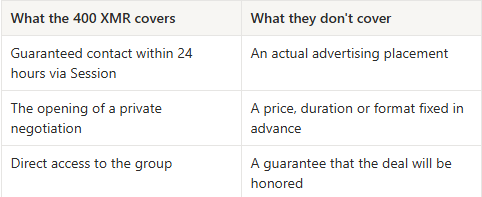
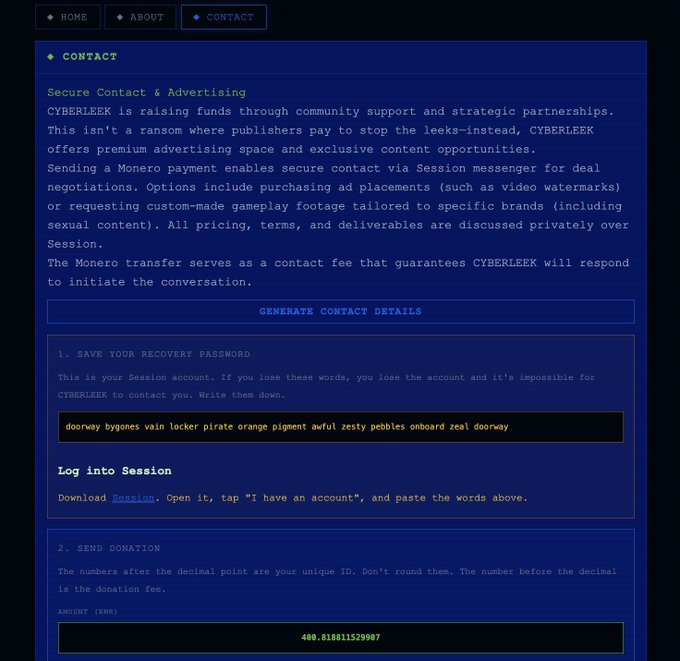
Contact page on CyberLeek’s website
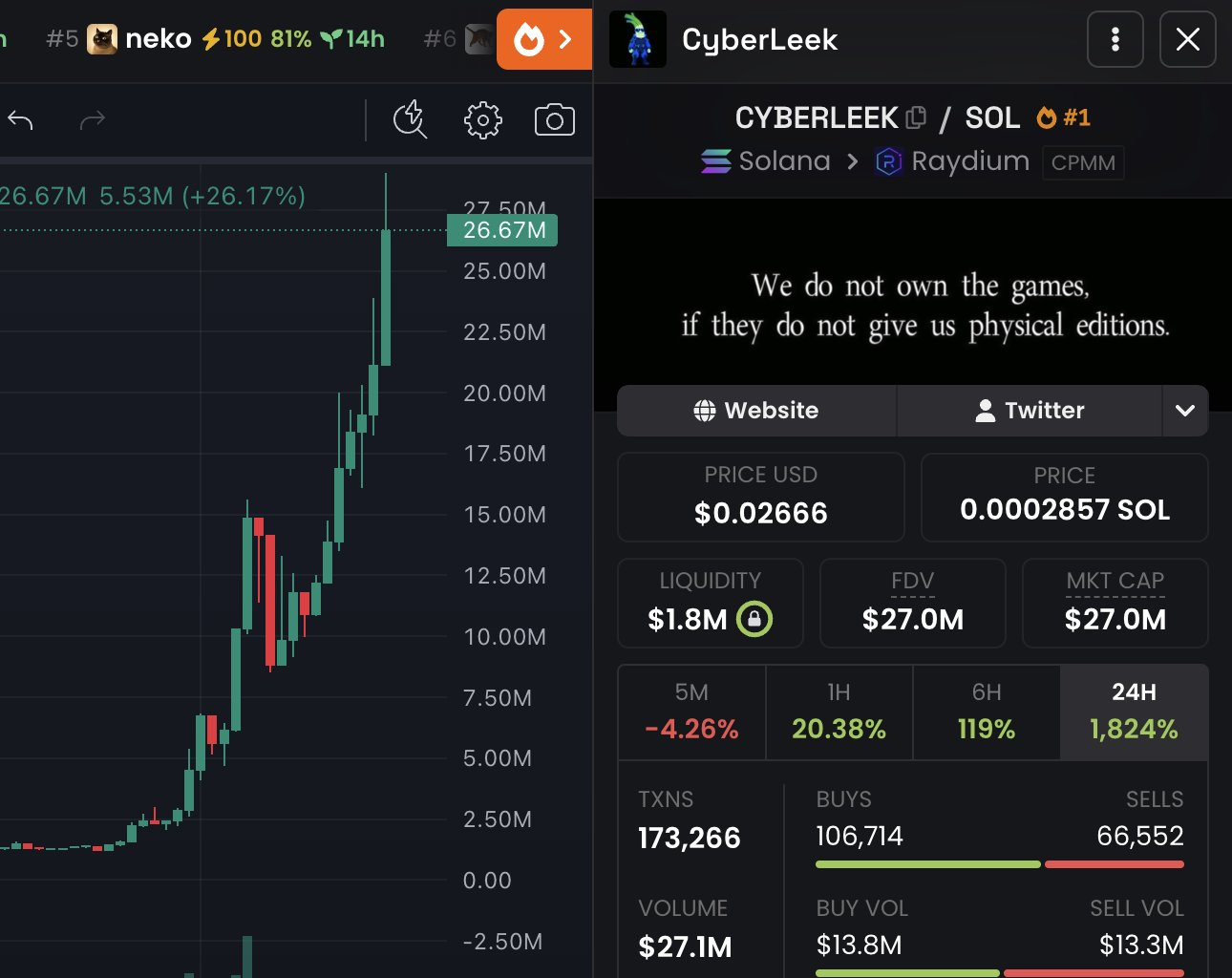
CYBERLEEK token market activity associated with the CyberLeek GTA VI leak campaign, showing a reported $27 million market capitalization and $27.1 million in 24-hour trading volume
The Dev Tokens Burn Was a Marketing Stunt, Not a Sacrifice
In the context of the CyberLeek cryptocurrency scheme, "dev tokens" (short for developer tokens) refer to the cryptocurrency allocated to the project's creator at launch. On August 15, 2026, CyberLeek launched a Solana-based meme coin called "CYBERLEEK" with 1 billion tokens created. These tokens were part of the initial distribution that the leaker controlled and could have sold for profit. By August 22, the supply of CYBERLEEK tokens was 729,960,016, suggesting approximately 270 million tokens (27% of total supply) were categorized as developer holdings.
The act was framed as proof that the project was not a pump-and-dump scheme, designed to silence accusations of profiteering and generate widespread positive coverage. By publicly destroying such a large portion of the supply, CyberLeek created a narrative of integrity and selflessness that was widely reported by crypto and gaming media outlets.
However, the burn was a selective sacrifice. CyberLeek destroyed only the portion of tokens that would have been difficult to sell without crashing the price. The tokens that were burned were effectively illiquid, meaning they could not have been cleanly converted to cash without devastating the token's value. By sacrificing these tokens, the leaker generated enormous positive publicity while retaining the revenue streams that would quietly generate ongoing profit. The burn cost CyberLeek a revenue stream that was never truly accessible in the first place.
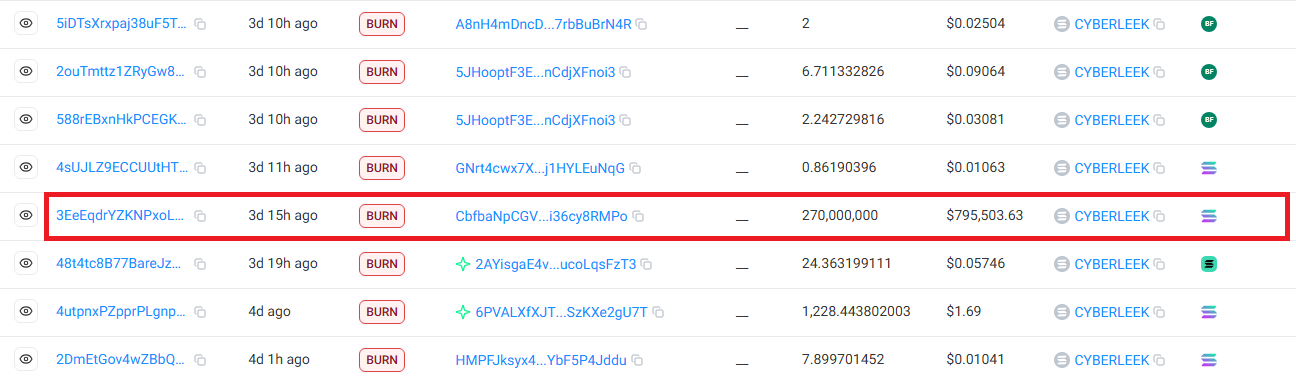
BURN action on 270,000,000 dev tokens
Burn Wallet address: CbfbaNpCGV64g2fbLBC2NXKSygeJJuC7S6i36cy8RMPo

This confirms that the burn wallet was deliberately emptied to create a narrative of integrity, with the tiny remaining balances serving as near-zero remnants of a wallet that was stripped clean by design.
The "not about money" narrative is further contradicted by the timeline of the operation. Blockchain analysis confirms that the CYBERLEEK token was launched on Solana on August 15, 2026, and its initial liquidity pool was established over seven full hours before the first GTA 6 footage appeared on August 16. The entire cryptocurrency infrastructure was built and ready before any game content was released, proving that the leaks were designed as a vehicle to promote and profit from the token, rather than the token being a spontaneous addition to an activist campaign. The leaks exist to drive token trading volume, not the other way around.
The ongoing monetization of the operation also demonstrates the true financial motive. CyberLeek continues to collect an estimated $40,000 to $70,000 in transaction fees from the token, with daily trading volume generating approximately $4,400 per day. The leaker also charges approximately $165,000 for a single reply through the Monero-based contact system. These revenue streams continue flowing into the operation long after the burn was completed.
The consumer advocacy campaign Stop Killing Games has publicly disowned the CyberLeek operation. On its official X account, the campaign stated: "He is leaking GTA 6 to promote his meme coin, which doesn't help at all." The group further emphasized: "Do not send these people your money. This is illegal... Using illegal means to make a point is unacceptable to us." This rejection from a legitimate consumer rights organization underscores that CyberLeek's activist rhetoric is a cover for a commercial venture.
The carefully timed burn, the preservation of ongoing revenue streams, the pre-planned token launch before any leaks appeared, and the continued monetization all demonstrate that CyberLeek's stated altruism is a marketing narrative for a well-planned cryptocurrency enterprise. The burn was a calculated PR move designed to buy positive news coverage while maintaining the operation's profitability through transaction fees and exclusive access sales.
Infrastructure
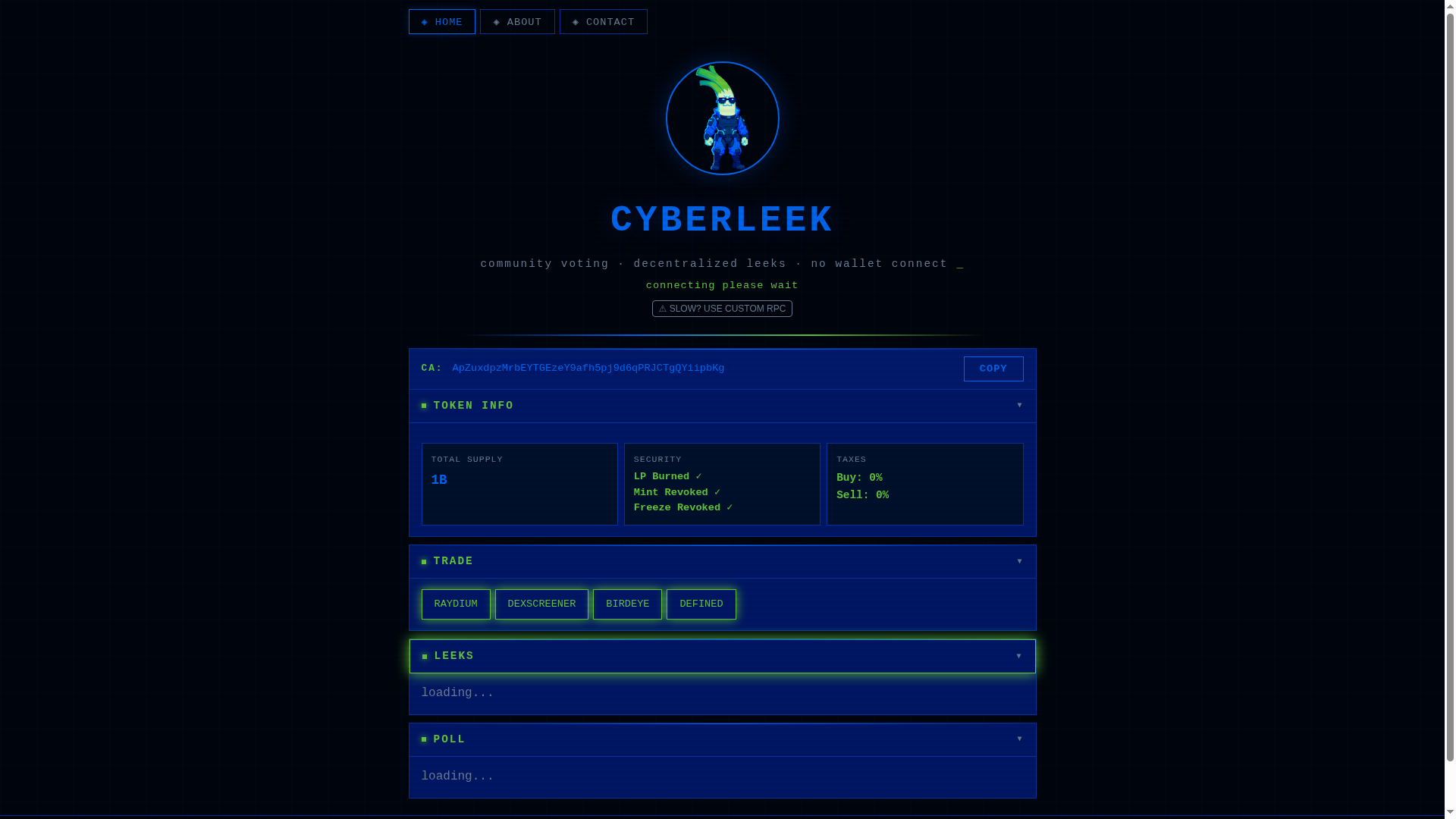
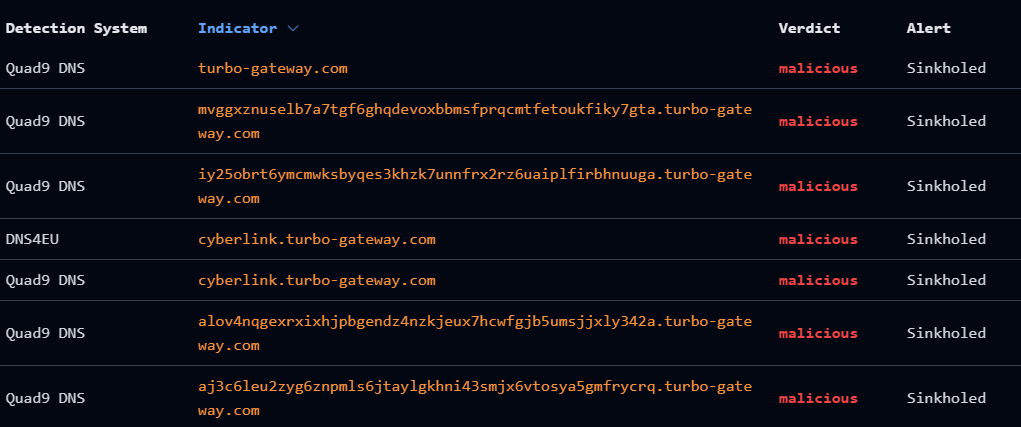
Some domains were live and displayed the CyberLeek page normally. Others were also live but showed no CyberLeek content at all, even though they had already been flagged as malicious on multiple platforms. A third group displayed a message saying that the requested content was blocked by that node's content policy, with the blocked ID listed as "cyberleek." This is important because it looks like a takedown from the outside, but it is not. The website itself has not been removed from Arweave. It remains accessible through other gateways, which explains why new GTA 6 clips have continued appearing online despite what looks like a successful takedown on one or more nodes.
- [cyberleek[.]gatewaypie[.]com, cyberleek[.]perma[.]online, cyberleak[.]gatewaypie[.]com, leek[.]gatewaypie[.]com, cyberleeks[.]turbo-gateway[.]com, cyberleaks[.]turbo-gateway[.]com, cyberleek[.]vevivo[.]art, cyberleek[.]ar[.]anyone[.]tech](http://cyberleek.gatewaypie.com/)
- cyberlink[.]turbo-gateway[.]com, cybersleek[.]turbo-gateway[.]com, cyber[.]turbo-gateway[.]com, yberleek[.]turbo-gateway[.]com, cyperleek[.]turbo-gateway[.]com, cybereek[.]turbo-gateway[.]com, pcyberleek[.]turbo-gateway[.]com, cyberieek[.]turbo-gateway[.]com, cyberleeke[.]turbo-gateway[.]com, leeek[.]turbo-gateway[.]com, cybeleek[.]turbo-gateway[.]com
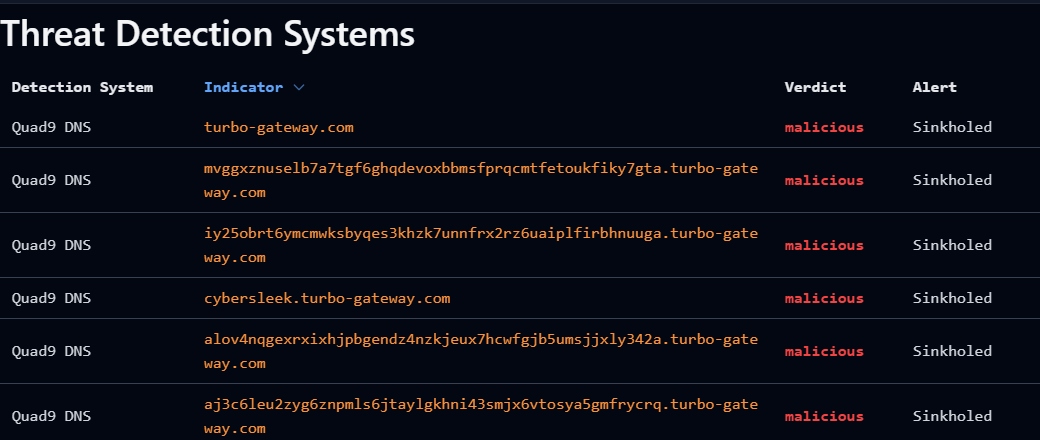
- ciberleek[.]turbo-gateway[.]com, cyberleek[.]frostor[.]xyz, cyperleek[.]ario[.]koltigin[.]xyz, leek[.]ario[.]koltigin[.]xyz
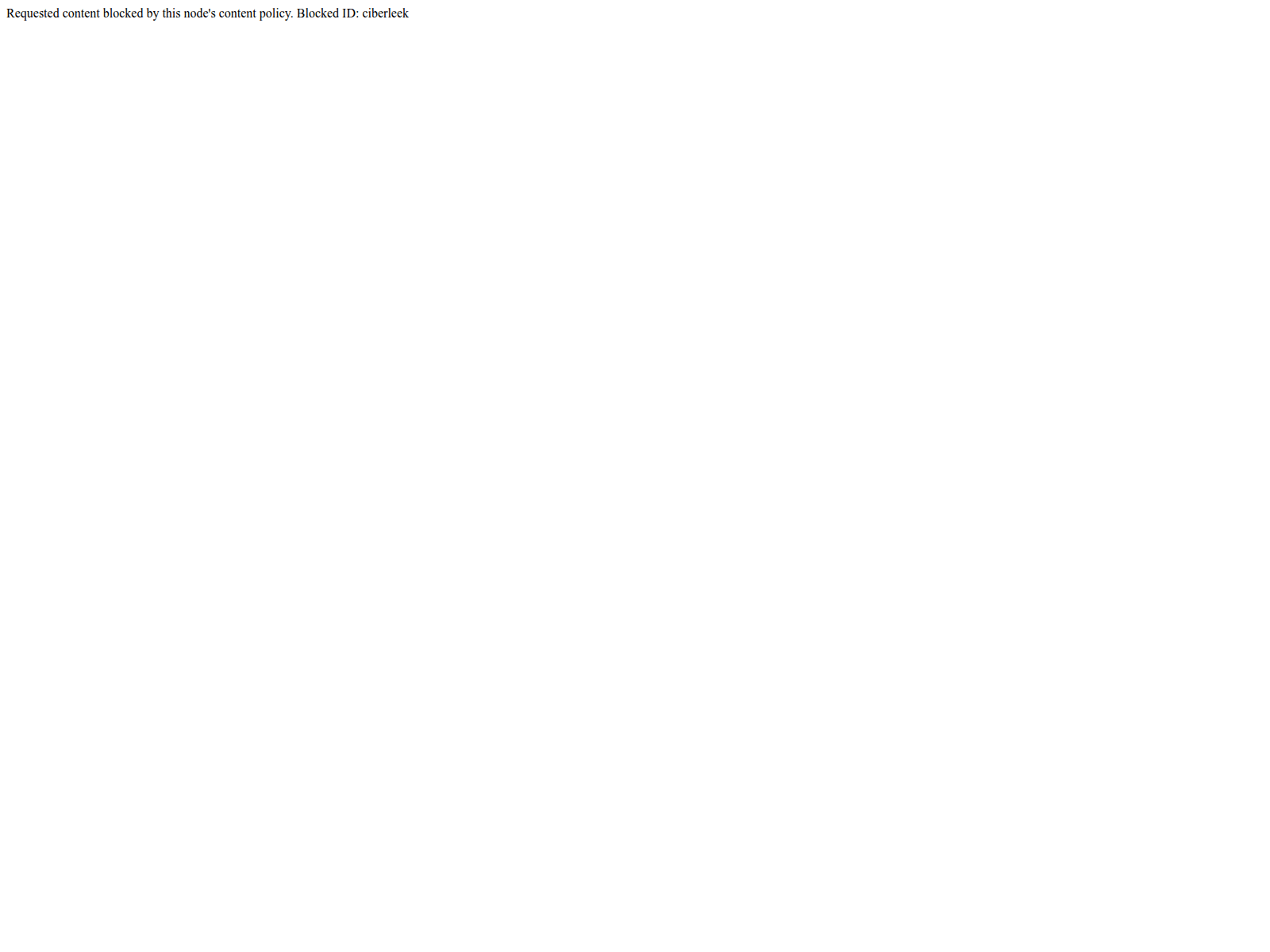
Usage of AI in videos?
While a lot of AI-generated fakes have indeed infiltrated the internet, Cyberleek's batch is most likely genuine, and he probably has far more than just a few videos in his possession.
At the very end of the piloting video, the protagonist pulls out a gun and fires a burst at the wall, the bullet holes spelling out four letters: LEEK
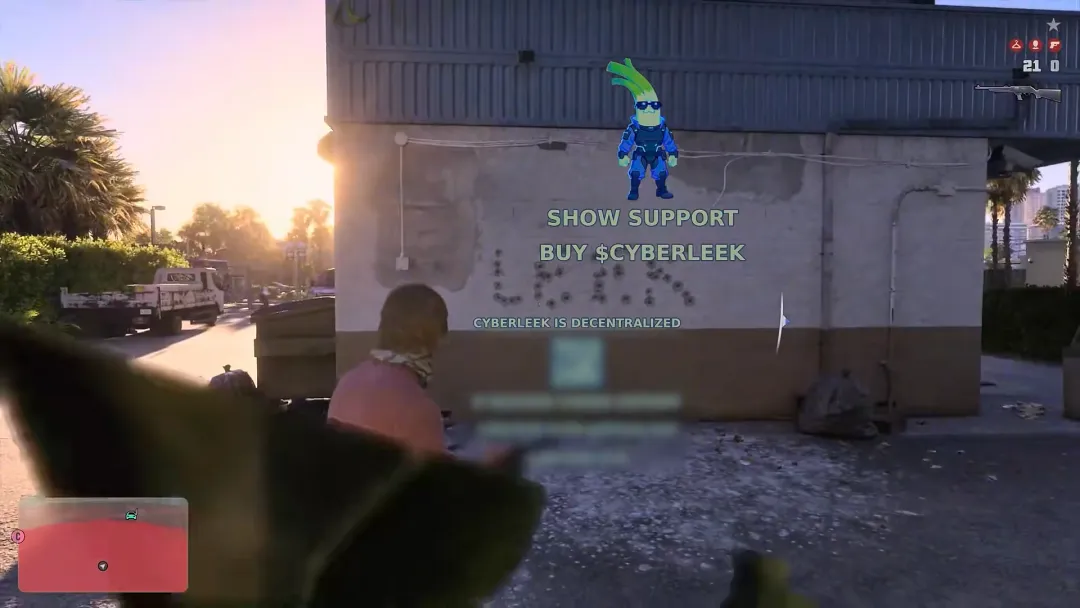
How CyberLeek Obtained the GTA VI Files
The exact method by which CyberLeek obtained the GTA VI files remains unconfirmed by Rockstar Games or its parent company, Take-Two Interactive. Rockstar has not issued a public statement on this incident, leaving the full details of the breach unclear as of this writing. However, based on security researcher analysis, media reports, and the history of attacks against the company, several credible possibilities have emerged.
The 2022 Precedent
The most widely reported theory is a network intrusion that follows the pattern of Rockstar's 2022 breach. In September 2022, a British teenager named Arion Kurtaj, a member of the cybercrime gang Lapsus$, hacked into Rockstar using only a cell phone, a hotel TV, and an Amazon Firestick while in police custody. The attack resulted in the release of 90 videos of unfinished GTA VI gameplay footage, described at the time as one of the largest video game leaks in history. Kurtaj was later sentenced to an indefinite hospital order and, as of July 2026, was transferred to a secure facility while awaiting retrial. The 2022 incident was caused by a successful phishing attack on a Rockstar employee's Slack account, which allowed the hacker to bypass internal security defenses.
The 2026 Attack Vector
According to reports from the Spanish gaming news outlet eXtas1s and other sources, the current leak may have originated through a similar attack chain. The hacker group 808 Mafia is alleged to have conducted a phishing attack targeting an employee at Rockstar's India office. The specific target was reportedly the office's technical director, whose compromised account credentials were then used to bypass internal security defenses and infiltrate the corporate network.
Once inside, the hackers are said to have accessed internal documents, financial records, employee personal data, and, most critically, an Xbox development build (devkit) of GTA VI. The hackers have provided what they claim is proof of the attack by releasing a watermarked financial document from the Bangalore Rockstar India office.
The stolen data was reportedly sold to CyberLeek in exchange for approximately $50 million in cryptocurrency, who then began releasing gameplay footage and promoting a cryptocurrency token. The attack is also consistent with the pattern of cyber criminal insiders, individuals with direct access to game builds who can exfiltrate files without triggering alarms from the outside.
Other Possible Attack Vectors
Given the sophistication of the leak and the monetization scheme, other potential vectors have been considered. The possibility of an AI agentic model or automated intrusion tool has been discussed, though no evidence confirms such a method. Additionally, Rockstar has faced multiple security incidents in 2026 involving third-party data breaches: in April 2026, the ShinyHunters hacking group accessed nearly 80 million records from Rockstar's Snowflake data provider through compromised Anodot credentials. While that breach primarily involved analytics data rather than source code, it highlights the security vulnerabilities present in Rockstar's vendor ecosystem.
Uncertainty Remains
It is important to note that all theories regarding a breach at Rockstar India, the involvement of 808 Mafia, and the sale of an Xbox devkit remain unconfirmed by Rockstar Games and Take-Two Interactive. The companies have not publicly commented on the source of the leaks, and the information currently available comes from unverified security reports and media sources. As of now, the exact attack vector used by CyberLeek to obtain the GTA VI files cannot be definitively confirmed.